


Read the Difference!




Latest Comics
-
#561. Spectrum #2 – Page 12
70 21213 Jun 22, 2024
-

#562. Gloaming #3 – Page 16
62 20827 Jun 23, 2024
-
#563. Conventions of Corruption – Page 9
74 20593 Jun 24, 2024
-
#564. Spectrum #2 – Page 13
68 20838 Jun 25, 2024
-
#565. Gloaming #3 – Page 17
77 20684 Jun 26, 2024
-
#566. Conventions of Corruption – Page 10
49 20569 Jun 27, 2024
-
#567. Spectrum #2 – Page 14
58 20823 Jun 28, 2024
-

#568. Gloaming #3 – Page 18
73 20664 Jun 29, 2024
-
#569. Conventions of Corruption – Page 11
58 20742 Jun 30, 2024
-
#570. Spectrum #2 – Page 15
58 20860 Jul 01, 2024
Page 5

GENE DAY AWARDS
The Gene Day Awards honour Canadian comic book creators or creative teams who self-published their work but did not have the books distributed by a third party such as Diamond Comic Distributors, Inc.
This year, I submitted three titles for consideration: Thunder #5, Gloaming #2, and Spectrum #1. While they all made the list of inclusion, regrettably none of them were made the final cut for nomination. However, I’d like to make a big shout-out to the short list of this year’s nominees:

- MITCH COOK, KEITH GRACHOW – Saltwater #1 (Kika Mika Comics)
- JOHN FLEMING, COLETTE TURNER – Badassical #1 (Dapper Drone)
- MICHAEL CHRISTOPHER HERON, ANDREA FORT, SAM BECK – Songs for the Dead #1 (Necromancer Press)
- JAMIE MICHAELS, EVIN COLLIS – Canoe Boys (Dirty Water Comics)
- NUNUMI – Sky Rover
- VARIOUS – Toronto Comics, Vol. 3 (Toronto Comics Anthology)
Please, support Canadian Independent Comics. Together, our voices are strong– and you, the reader, directly contribute to building our culture to have more and more recognition each year!
Congratulations to all the nominees!
Page 4

HAPPY CANADA DAY– 150 YEARS!
At Calgary Expo this year, Jeremy Thew drew a wonderful picture of my half-Norse God, half-Canadian hero, THUNDER, meeting his hero, Captain Canuck. I showed the sketch to Richard Comely, the creator of the good Captain; today I have coloured it and present it to share with you my joy of being Canadian, and to share a couple Canadian heroes with you.
HAPPY CANADA DAY!

About Us
 Canadian writer Michael McAdam presents Two Gargoyles Comics! “Twogargs” is an independent publisher of comic titles, including the genres of superheroes, comedy, horror, and urban fantasy… with more to come.
You can read all about each title and individual issue on this site using the main menu above. You can purchase digital copies of these comics right here on the site, and print copies at Indyplanet, or at DriveThruComics.
Two Gargoyles Comics is based in Alberta, Canada, and appears live at conventions in Western Canada and wherever else the winds take us!
Canadian writer Michael McAdam presents Two Gargoyles Comics! “Twogargs” is an independent publisher of comic titles, including the genres of superheroes, comedy, horror, and urban fantasy… with more to come.
You can read all about each title and individual issue on this site using the main menu above. You can purchase digital copies of these comics right here on the site, and print copies at Indyplanet, or at DriveThruComics.
Two Gargoyles Comics is based in Alberta, Canada, and appears live at conventions in Western Canada and wherever else the winds take us!
Featured Comic:
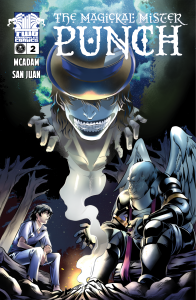
Latest Comic!
Most Recent Comics!
-
1
#722. Punch #2- Page 8
107 21778 Jul 30, 2026
-
2
#721. Punch #2- Page 7
103 21777 Jul 30, 2026
-
3
#720. Punch #2- Page 6
103 21777 Jul 30, 2026
-
4
#719. Punch #2- Page 5
103 21777 Jul 30, 2026
-
5
#718. Punch #2- Page 4
103 21777 Jul 30, 2026
-
6
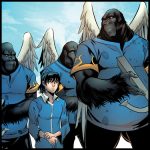
#717. Punch #2- Page 3
103 21779 Jul 30, 2026
-
7
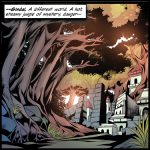
#716. Punch #2- Page 2
103 21776 Jul 30, 2026
-
8
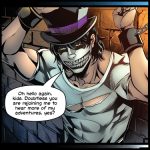
#715. Punch #2- Page 1
103 21778 Jul 30, 2026
-
9

#714. In The Wings: June 2026
883 19556 Jul 30, 2026
-
10

#713. In The Wings: May 2026
883 19554 Jul 30, 2026
Products
-
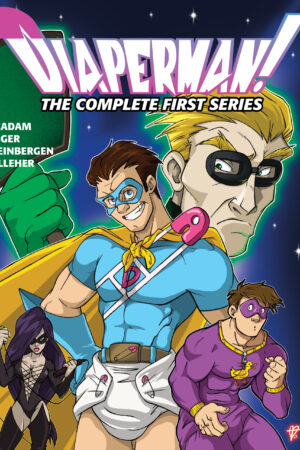 Diaperman Vol 1
$9.99
Diaperman Vol 1
$9.99
-
 Diaperman Vol 2
$9.99
Diaperman Vol 2
$9.99
-
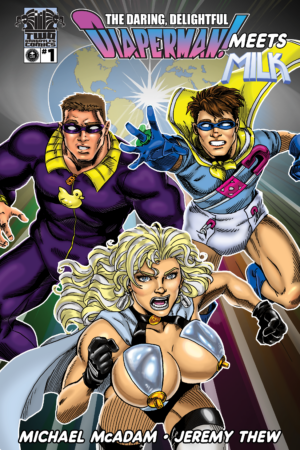 Diaperman Meets Milk
$4.99
Diaperman Meets Milk
$4.99
-
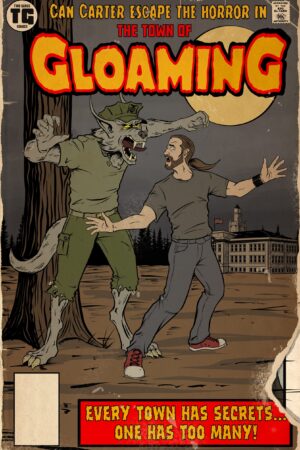 Gloaming Vol 1
$9.99
Gloaming Vol 1
$9.99
-
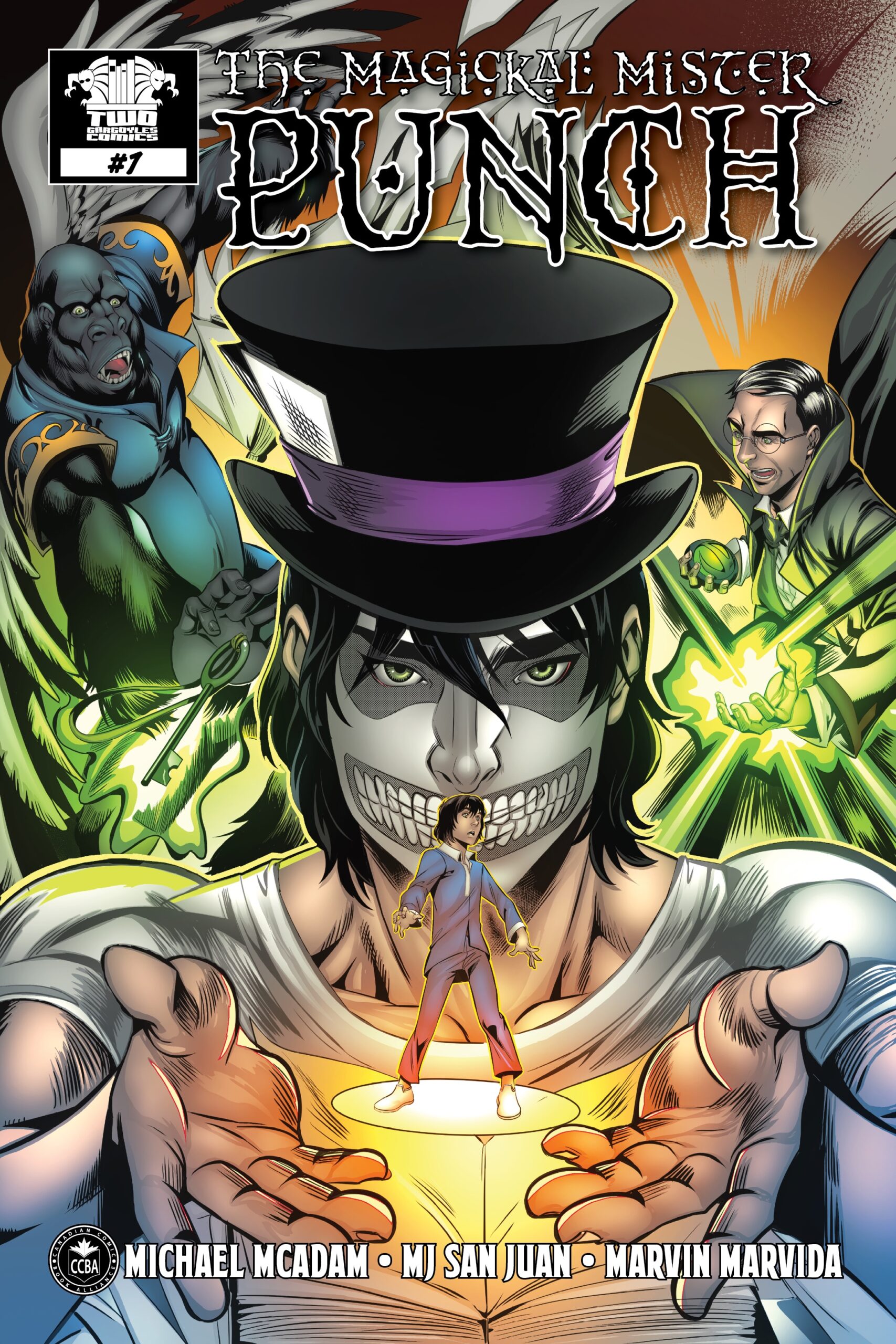 Magickal Mister Punch #1
$1.99
Magickal Mister Punch #1
$1.99